

An effort to put a number on whether you meditated well has emerged in the United States. Equa, a meditation app that grew out of a Carnegie Mellon University lab, announced in a press release from Pittsburgh on October 26 that it had launched Meditation Performance Insights, a feature that tracks each breath during meditation when users place their phone on their chest. It uses only the phone’s motion sensors, without a separate wearable device worn on the wrist or chest.
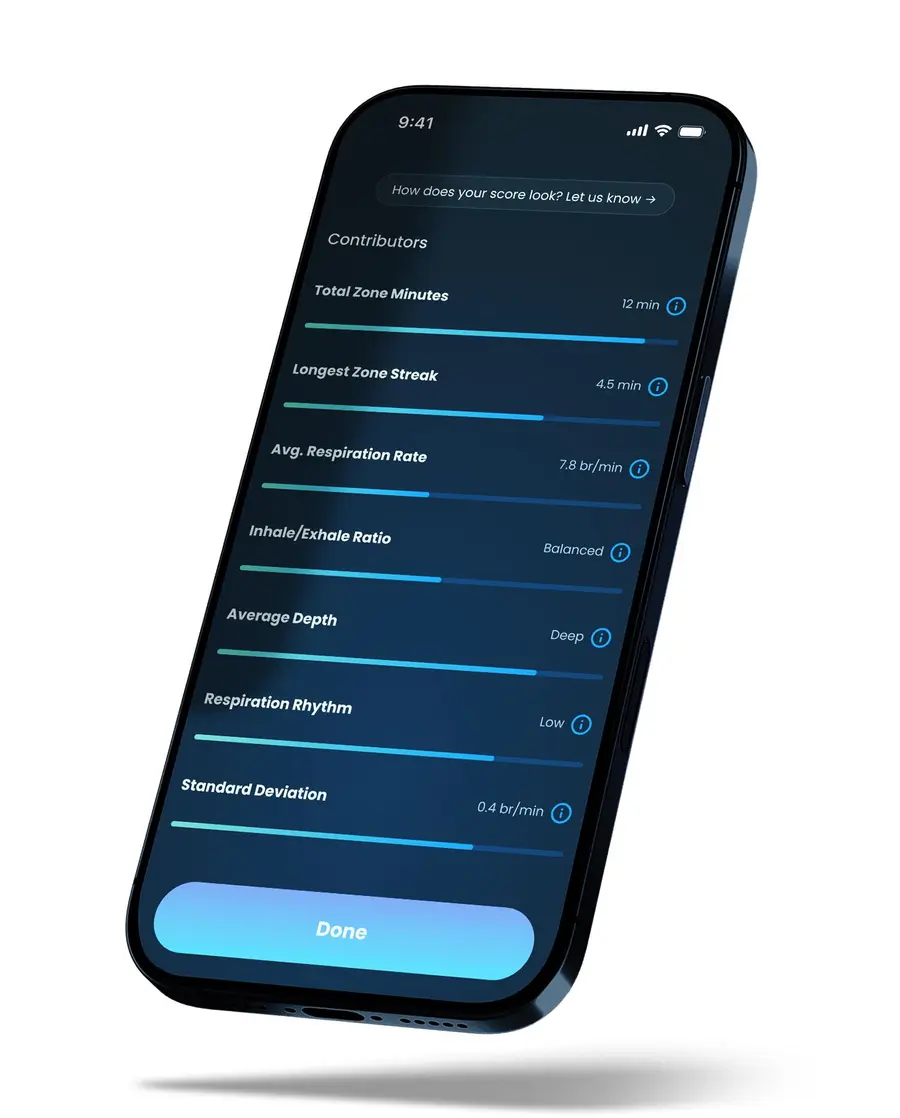
It tracks every breath, then gives you a score from 0 to 100
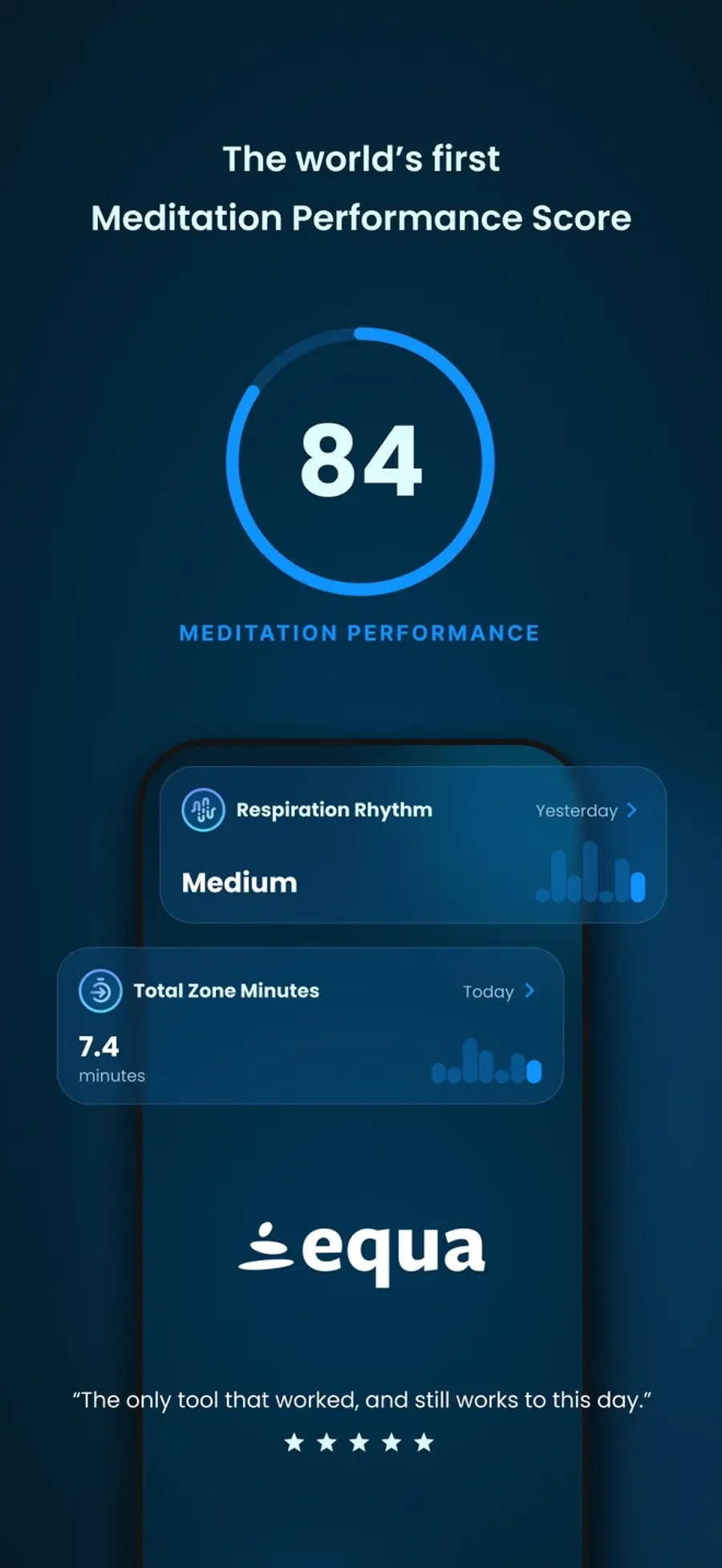
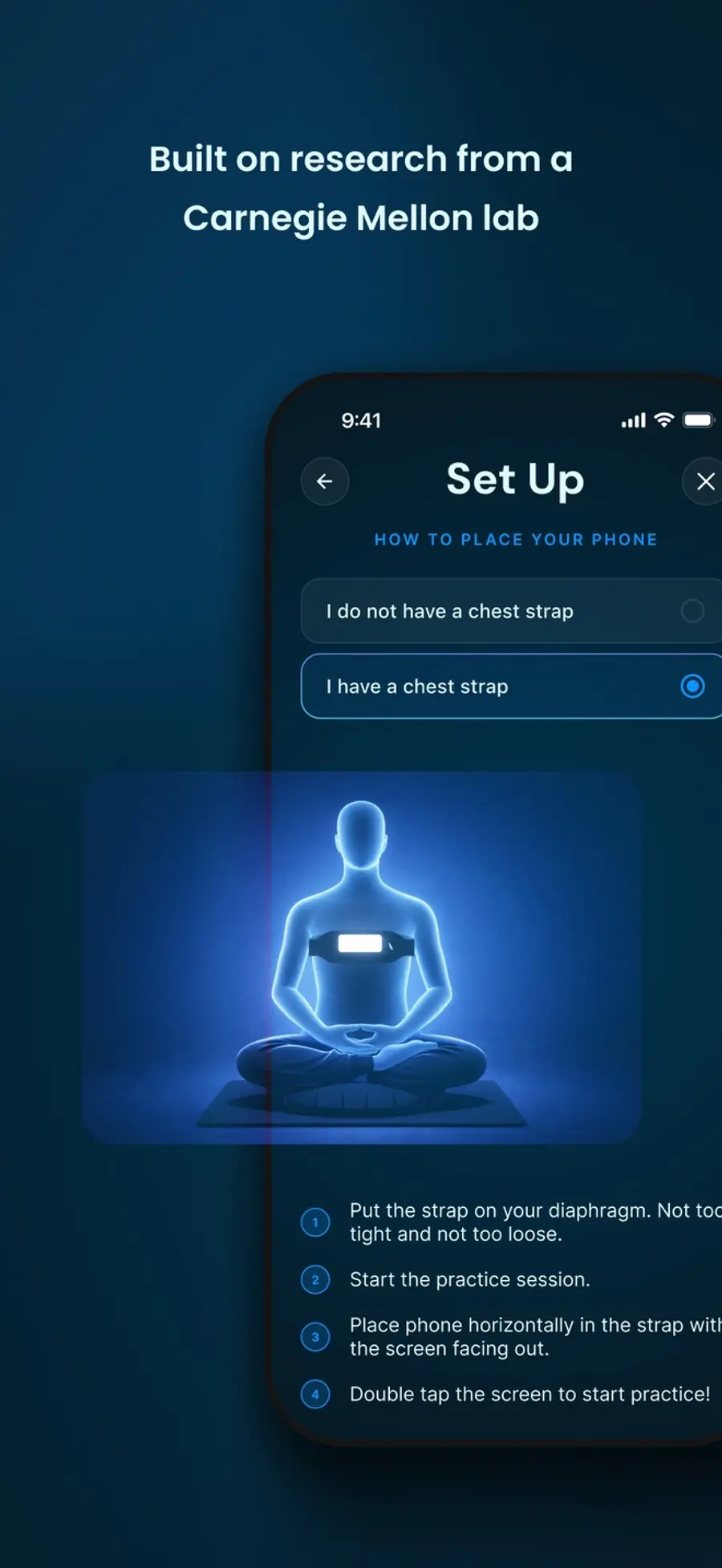
The process is simple. Start a guided meditation in the app and place your phone on your chest. The sensors detect the movement of your chest as you breathe in and out. When the session ends, the app shows how your breathing changed and assigns a score. Equa’s official website describes it as a meditation performance score from 0 to 100 and says it also displays metrics such as time spent in the ideal zone, breaths per minute and breathing consistency. The App Store listing also explains how to use the phone attached to a chest strap.
The app is available for iPhone and Android. Users choose a price that fits their budget. In the press release, co-founder and CEO Mathew Polowitz said that users can now watch the changes taking place in their bodies during meditation as they happen.
An app born from 15 years of lab research, named for equanimity
Equa traces its roots to Carnegie Mellon University’s Health and Human Performance Lab. The lab’s director, Professor David Creswell, is the William S. Dietrich II Professor of Psychology and Neuroscience at Carnegie Mellon. He has conducted clinical research on mindfulness meditation for more than 15 years and published more than 75 scientific papers. He has also led several placebo-controlled clinical trials of mindfulness. Creswell is Equa’s co-founder and chief science officer. Polowitz founded the company while he was a Carnegie Mellon Innovation and Commercialization Fellow.
The app’s name comes from “equanimity.” In the press release, Professor Creswell described equanimity as the ability not to react to whatever arises, emphasizing that this—not calmness or relaxation—is the actual mechanism behind mindfulness. Development of the feature was supported by a grant from the National Institute of Mental Health (NIMH), award R44MH134709.

Still being tested: a clinical trial with 60 people ages 18 to 30 is underway
The breathing-measurement feature is still being validated rather than representing a technology whose research is complete. ClinicalTrials.gov, the U.S. clinical trial registry, shows that Equa has been testing the feature in two stages. The first study, which ran from May 2024 to August 2025, aimed to record breathing signals as 80 people ages 18 to 30 experiencing psychological distress completed 14 modules of guided meditation, with the goal of developing an algorithm that provides feedback.
The second study is listed as having started in July 2025 and currently recruiting participants, with a target of 60. Participants are randomly assigned to two groups; only one group sees graphs of breathing changes and scores for mindfulness skills. The study compares user satisfaction and changes in mindfulness skills. Results have not yet been made public. The announcement also did not include separate validation results showing how accurately the phone’s sensors measure breathing. The company’s claims about effectiveness on its website are based on its own data and are not covered in this article.
95% quit within a month. Will scores motivate users—or add pressure?
In an interview last September with The Educated Patient, a U.S. healthcare publication, Professor Creswell said that 95% of people who download a meditation app stop using it within a month. He advised starting small, pairing meditation with small rewards, and using reminders and streaks to build a habit. A feature that measures breathing and displays a score can also be seen as an attempt to address the challenge of sticking with the practice.
In an age of nonstop information, it’s natural to want to see whether you’re doing something right. For someone new to meditation, a single graph could be a reason to sit down and try again today. But a score can also become one more grade to chase. The moment you try to raise it, your breathing can tense up again. If the equanimity Professor Creswell described is the ability not to react to whatever arises, then looking at a low score without being thrown off by it is itself part of the practice. It’s better to use measurement as a guide and let the sensations in your own body be the standard for meditation.
Your palm can be a sensor, too: a chest-breathing awareness practice to try today
What makes this feature interesting is that it brings meditation back to the breath and the body. Just as a phone can detect your chest rising and falling, your hands can do the same. If sitting for a long time is difficult, you can start lying down. Lie on your back, place one hand on your chest and the other on your abdomen. Don’t try to change your breathing; simply notice your body expanding and settling beneath your palms. Count your breaths from one to ten, and if you lose track, start again at one. Counting the breaths to gather the mind—a practice known as su-sik-gwan in Korean meditation—is a traditional way to begin in Korean meditation settings.
Whether meditation measured by a device or felt by hand is right for you depends on the person. For someone who needs numbers to stay consistent, a tracking app can be a helpful companion. For someone who finds looking at a screen tiring, putting the phone down can be the first meditation. Either way, you can start by noticing how your breath is moving today.
Contact: fare3041@naver.com