

Could closing your eyes, making sounds and letting your body move blur the line between you and your surroundings? A research team at Université Bourgogne Europe in Dijon, France, studied 17 practitioners who voluntarily entered a trance state without drugs or external devices. They reported that during trance, their sense of bodily boundaries diminished sharply, while feelings of oneness with their surroundings and inner peace increased. The paper was published August 27 in the journal Neuroscience of Consciousness, and the U.S. psychology outlet PsyPost covered the study on October 14. The researchers stressed that this was a small preliminary study and cautioned against viewing trance as a treatment.
From drum rhythms to sound and movement alone: What is cognitive trance?
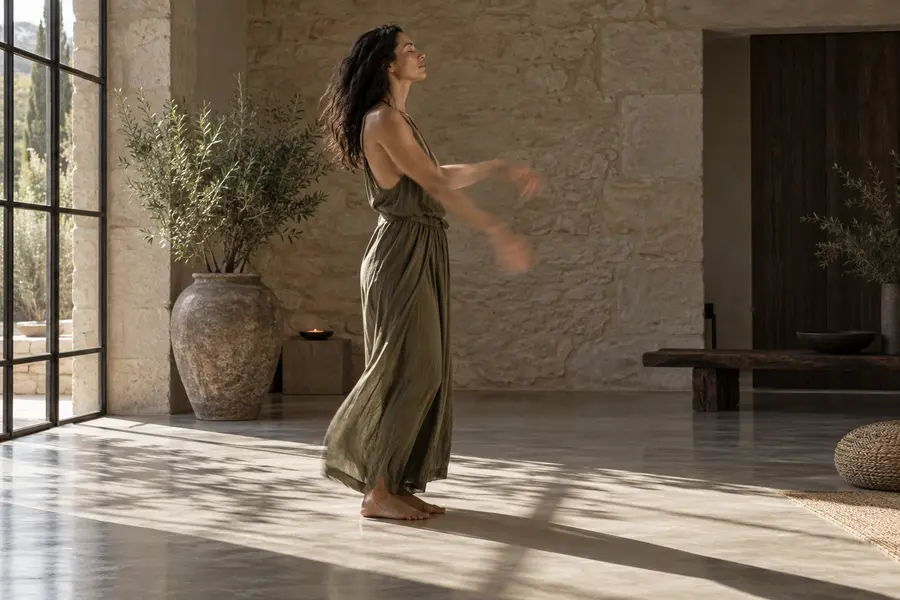
The practice examined in the study is called auto-induced cognitive trance. According to the paper, the method began as an attempt to recreate the repetitive rhythms used in traditional trance rituals, such as the drumming of Mongolian shamans. As observations accumulated that repeated sounds could induce trance in many people, the practice was developed into a standardized method. Today, practitioners enter the state through sounds they make themselves and bodily movement, without external music. It is also taught in a secular manner, without rituals or symbolic systems. The researchers described the state as one in which awareness of the external environment narrows while the person remains clearly awake.
The participants were practitioners who had learned the method at the Transcience Institute in Paris. There were 13 women and 4 men, with an average age of 49. They had received training an average of about 15 months earlier. Most practiced several times a week, for about 10 minutes at a time. Many had advanced degrees and worked in health care.
17 participants recalled two scenes: their most recent meal and their deepest trance
The researchers asked participants to recall two moments in random order: their most recent mealtime and a deep trance experience intense enough to stand out in memory. Participants spoke freely about their thoughts and feelings during each moment and rated their sense of self and emotional state on a scale from 0 to 100.
Their thoughts differed, too. The share of time spent daydreaming about the future fell from 31.5% during a meal to 2.7% during trance. The feeling that they themselves generated their thoughts and emotions dropped from 67.4 to 12.1, while their sense of time passing fell from 64.3 to 7.0. Eleven of the 17 participants said they could not tell how quickly time had passed during trance.
Bodily boundaries faded, oneness rose from 28.4 to 75.9, and inner peace increased by 30 points
The shifts in bodily sensations were even more pronounced. The feeling of controlling their own movements fell from 83.8 to 10.4. The sense that bodily boundaries were distinct dropped from 83.8 to 36.5, while the feeling of being one with their surroundings rose from 28.4 to 75.9. The sense of being anchored to one point also fell, from 85.7 to 50.4. Interestingly, there was little difference between the two states in the feeling of being one’s body or being at the center of the scene.
On the emotional side, overall happiness rose from 50.5 to 74.2, and inner peace from 44.3 to 74.7. Satisfaction also increased, but the difference was not statistically significant. During trance, the feelings most clearly linked to happiness were a sense of moving away from the center of the scene and being less anchored to one point. Unlike the reduction in daydreaming, changes in thought were not clearly associated with happiness. The researchers interpreted the findings as consistent with their theoretical model, which proposes that inner peace can increase when self-centeredness loosens.
Some participants felt fear; researchers were upfront about the limitations
Not every experience was comfortable. Some participants described fear or a sense of being weighed down. One said that the observing self acted like a brake, preventing the trance from deepening. Participants said they could leave the trance whenever they wanted, which the researchers said distinguished it from pathological dissociation. They added that meditation research has also documented how shifts in one’s sense of self can be unsettling.
The researchers also acknowledged the study’s limitations. Because it was a preliminary study with only 17 participants, the effect sizes may be inflated, and the practitioners, all trained at the same institution, may have had similar expectations. One co-author is affiliated with the institute that teaches the practice. Since participants answered by recalling past experiences, vivid memories may have been distorted. Comparing their deepest trance with an ordinary meal may also have made the differences appear larger. And because the study captured a single point in time, it cannot establish cause and effect or lasting changes. Lead author and researcher Pierre de Oliveira told PsyPost that such experiences are not always enjoyable and may not suit everyone. The researchers emphasized that the findings do not mean trance makes people happier; they are simply a record of momentary states.

A practice of entering an altered state through movement, not stillness: First ask if it’s right for you
What makes this study interesting is that it documents, in scientific terms, a state of consciousness entered not by sitting quietly but by making sounds and moving the body. For some people, letting the body move first may be easier than trying to stop their thoughts. The questions the researchers identified for future work point in the same direction: Does repeated practice leave lasting changes in a person’s sense of self? What roles do practitioners’ expectations, the teaching environment and the way they process the experience after returning to everyday life play?
Trance practice should not be treated as the same thing as meditation. Still, this account may be useful to people looking for dynamic meditation involving movement or sound. If you’re interested in trying this kind of practice, put safety ahead of expectations. Rather than going deep on your own, start with a short session alongside a qualified instructor, and remember that you can stop at any time if anxiety or fear arises. If you are experiencing trauma or panic, consult a professional first. Rather than assuming one practice is right for everyone, start by choosing an approach that suits your body and mind.
For inquiries about this article: fare3041@naver.com