

Calm, the U.S. meditation app, launched Shift on October 27 (local time), a new feature that uses sound moving between the ears to help change how you feel in the moment. Calm described it as one of its biggest expansions into a new category since introducing Sleep Stories, its bedtime story content.
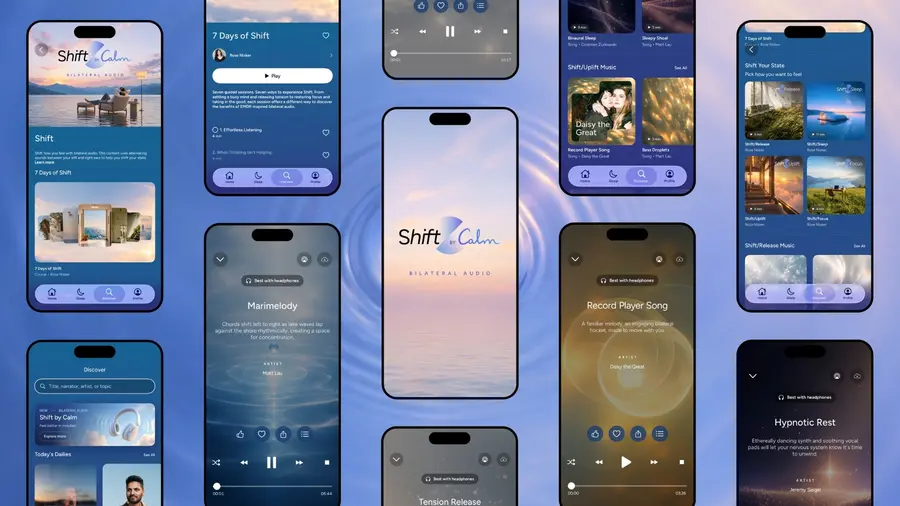
Sound tracks for four states: focus, release, uplift, and sleep
Shift is built around bilateral audio. The sound intentionally alternates between the left and right ears, creating a steady rhythm. Calm said it requires no special skills—just headphones and a few minutes—and is designed for use at bedtime, when you want to unwind, or when you want to clear the afternoon fog.
The launch includes three types of content. 7 Days of Shift, a seven-day guided program led by Calm meditation teacher Rose Nisker, pairs a few minutes of grounding guidance each day with a bilateral audio track. Shift Your State features one dedicated track for each of four states—Focus, Release, Uplift, and Sleep—each paired with looping visuals. Shift Music includes more than 20 bilateral audio tracks to choose from anytime.
The feature also includes a collaboration with musicians. New York-based duo Daisy the Great reworked their 2018 song “The Record Player Song” as bilateral audio, exclusively for Shift. Calm said it is the first of several songs the company will create with the duo. The duo said the track was a natural fit for Shift because their voices take turns passing the melody back and forth.
Shift is available only to paid Calm Premium subscribers, whose annual subscription costs $79.99. The U.S. college publication Her Campus reported that it is initially available to Premium subscribers in the United States. Whether Korean-language service will be supported has not yet been announced.
U.S. search interest up 5,000% in a year: Why the company is paying attention to this sound
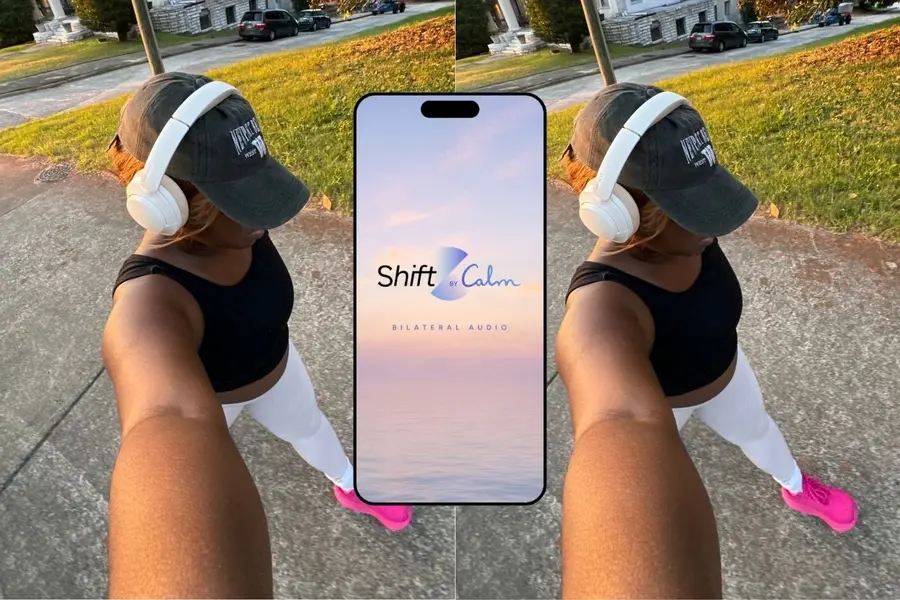
Calm first added bilateral audio content to its music library in 2022. According to the company, bilateral audio is now one of the most-searched terms in the Calm app, and Google searches for it in the U.S. have risen by more than 5,000% over the past year. Citing Calm data, Her Campus reported that bilateral audio tracks in the app were played more than 110 million times over the past year. These figures were all provided by the company.
Social media trends have also helped fuel interest. In a press release, Calm noted that a related concept, “brain flossing,” has gone viral online. The term describes listening to sound that moves between the left and right ears, as if flossing away mental clutter.
Bilateral stimulation originated as a technique used in therapy. Her Campus explained that since the late 1980s, therapists have used bilateral stimulation as part of EMDR (eye movement desensitization and reprocessing), a psychotherapy for addressing trauma and stress. Calm said it worked with outside consultants certified by the EMDR International Association during development to assess whether the content would be credible and safe for everyday use on one’s own.
Calm does not present Shift as therapy. The company’s help page says the content is inspired by EMDR techniques but does not replace clinical treatment. A Calm blog post about bilateral stimulation also describes its mechanisms as still theoretical, and cautions that people dealing with trauma or panic may find emotions overwhelming if they try it without a therapist. It advises users to stop if they feel dizzy or uncomfortable. The press release included no research findings specifically evaluating Shift’s effectiveness.

From meditation to sleep, and now sound: A meditation app broadens its reach
Calm CEO Dun Wang said of the launch, “We never intended to be a meditation-only app.” The company began with meditation, then moved into sleep, which led to Sleep Stories, Wang said. Shift is the next step: Calm says it aims to offer approachable care through bilateral sound and music.
Calm touts 180 million downloads to date, service in 10 languages, and availability in about 190 countries. The app, known for meditation practices like sitting quietly and counting breaths, is expanding into sleep and sound—a sign of how the offerings of meditation apps are changing. On October 22, Healing News covered Headspace’s sale and Calm’s expansion into corporate and insurance markets in a column by Oh Hye-sun. Shift takes a different direction, focusing on how individual users spend a few minutes of their day.
For those who find it hard to sit with their eyes closed, meditation through listening offers an entry point
In an age of constant information, being told to sit for a long time and clear your mind from the outset can feel like a high barrier for many people. Following sound can lower that barrier. In South Korea, meditation classes centered on sound, such as singing bowl meditation and sound baths, continue to draw participants. Focusing on bodily sensations and sound can give people new to meditation a way to practice returning to the present moment.

That said, sound moving between the left and right ears may not work for everyone. As Calm has also noted, addressing emotional wounds should be done with a professional, and a few minutes in an app is more of a tool for choosing how you feel. If the sound in your headphones feels comfortable, you could also explore body-based practices such as singing bowl meditation, walking meditation, or breath meditation. Whether sitting, walking, or listening, meditation begins with finding an entry point that works for you.
For inquiries about this article: fare3041@naver.com