

The Seoul Metropolitan Government will hold Seoul Wellness Travel Week 2026 from Oct. 24 to Nov. 4 in parts of Gangnam-gu and at venues included in the 100 Seoul Wellness Tourism Destinations. The event has been held annually since 2022. This year’s theme is “Seoul, Defining the Next of Wellness.” With Bongeunsa Temple, Pilgeongjae and Boston Chamber as hubs, the program is organized around rest and healing, healthy food, and music and art.
One notable feature is that meditation isn’t confined to a cushion. Walking temple paths at night, drinking tea, listening to the harp and moving slowly are all presented as ways into meditation. Even those who find it difficult to sit for a long time can take part in whatever way feels comfortable for their body.
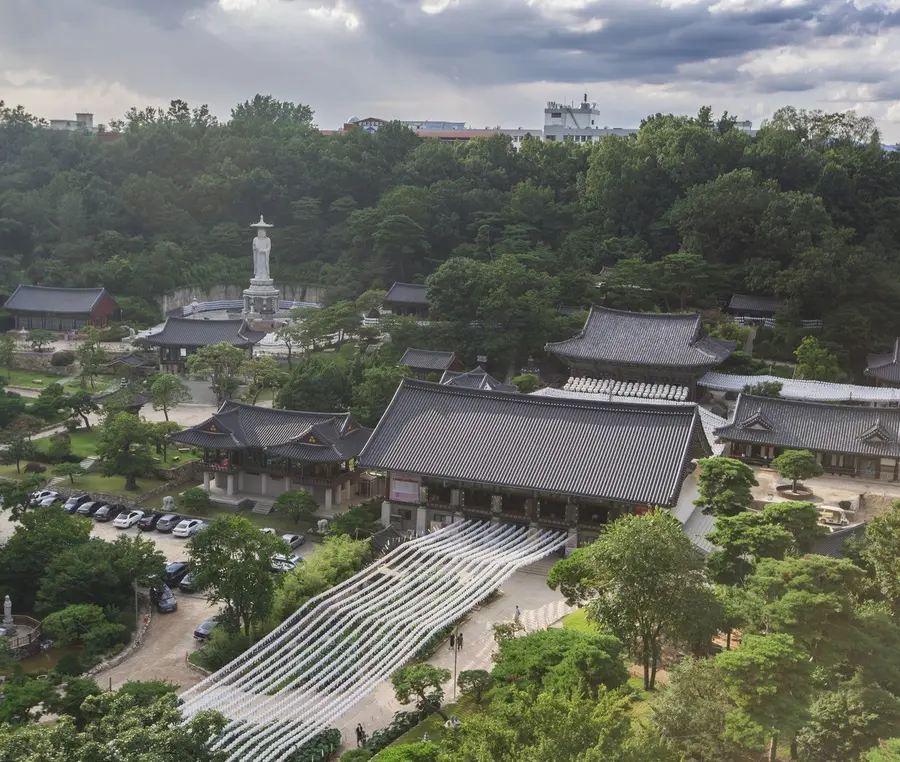
Two days at Bongeunsa, with only Venerable Geumgang’s Seon meditation class free among 15 sessions
Bongeunsa is the first venue. Fifteen wellness programs focused on meditation and movement will be held over two days, Oct. 24 and 25. On Oct. 24, Venerable Geumgang, head of the Jogye Order’s Seon Meditation Committee, will lead “Seon Meditation: A Path to Peace of Mind,” offering meditation practices for everyday life.
The schedule posted on the official website offers a wide range of activities. The first day includes a singing bowl performance, a tea gathering featuring Korean herbal tea with a Korean medicine doctor, a low-intensity recovery exercise class, fluid Odaka yoga, and a night walking meditation along temple paths. On Oct. 25, activities include meditation through song; training in body awareness through posture and movement; a movement ritual linking barre, Pilates and yoga; a breathing program for traveling through Seoul with the breath; a mindful tea time practiced over a cup of tea; and Anatta meditation.
Participation costs 5,000 won per person for each program; Venerable Geumgang’s Seon meditation class is free. Advance reservations for major programs are available on the official website, and some sessions are already full. Check availability before heading to the venue. Audio walking meditation, in which participants follow spoken guidance along a meditation path, will also be available throughout both days from 12:30 p.m. to 5:30 p.m.
No reservations or attendance limits: Night walks at 6 p.m. at Bongeunsa, Jogyesa and Hwagyesa
The event’s most accessible program is the nighttime audio meditation. It will run daily from 6 p.m. to 8:30 p.m. at three temples—Bongeunsa, Jogyesa and Hwagyesa—from Oct. 26 to Nov. 4. Participants can walk the meditation paths on their own while listening to audio guidance in Korean or English through the TripAudio app or a QR code at the venue. It is free, with no reservation or attendance limit.
Each temple offers a different route. At Bongeunsa, there is an approximately 30-minute route from Jinyeomun Gate along the meditation path to Daeungjeon Hall, as well as an approximately 15-minute route around the meditation path. Jogyesa offers an approximately 30-minute route from Iljumun Gate past the sarira pagoda to Daeungjeon Hall, and an approximately 10-minute circumambulation of the pagoda. At Hwagyesa, participants can take an approximately 40-minute route from Iljumun Gate to Daeungjeon Hall and Samseonggak Hall, or join an approximately 10-minute Seon meditation session at Daeungjeon Hall. Because the path at Bongeunsa is narrow, groups of no more than five will set off in turn, following instructions from staff on site.
For office workers new to meditation, it’s an approachable way to set aside the noise of the day with a roughly 30-minute walk after work. English audio guidance is also available, making it a good way to introduce Korean temple meditation to a foreign friend.
Three-meter hanji lanterns in a 500-year-old hanok courtyard, harp busking on Garosu-gil
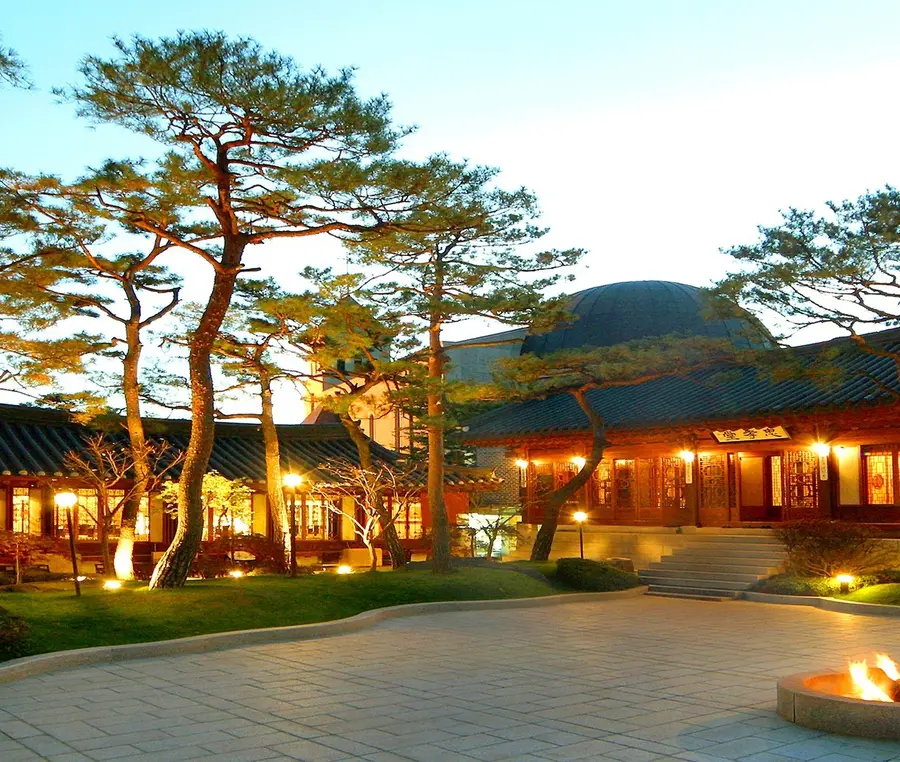
Pilgeongjae, representing the Taste category, is a traditional hanok passed down through generations of descendants of Grand Prince Gwangpyeong, a son of King Sejong. From Oct. 26 to Nov. 4, its inner courtyard will display two works by artist Kim Won-cheon: 3-meter-tall hanji lantern structures, including “Jiu (Paper House).” Shaped like a house and a jar, the works can be viewed from noon to 10 p.m. and will be illuminated at 6 p.m. Admission is free, with no reservation required, even for visitors who are not dining at the restaurant.
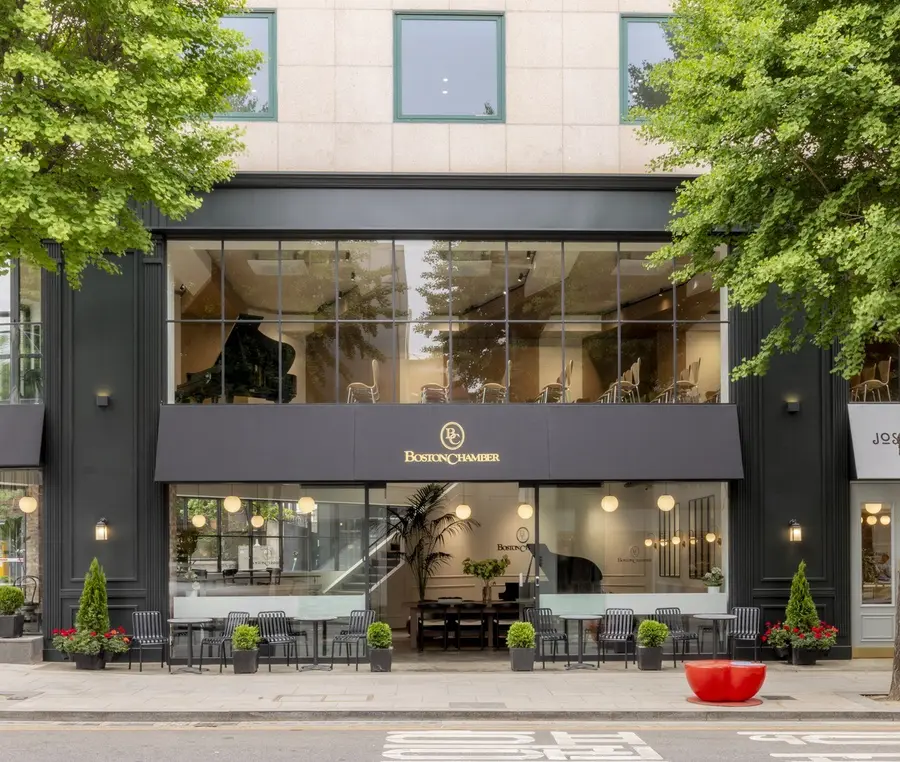
The Style program will be hosted by Boston Chamber, a cultural complex on Garosu-gil in Sinsa-dong. At 12:30 p.m. on the final day, Nov. 4, a sound-healing busking performance combining harp melodies and vocals will take place. It’s free to attend, with no reservation required. The event offers a chance to experience how listening closely can itself become meditation—on the street rather than in a concert hall.
Rice-cake tea and blue soybean paste: Eight of Seoul’s 100 wellness tourism destinations offer special experiences in the final week
From Oct. 29 to Nov. 4, eight venues on the 100 Seoul Wellness Tourism Destinations list across the city will offer special experiences. Programs include a sensory-restoration experience at Nuit, a chance to sample Korean rice-cake tea from different regions at Eocha, and a traditional fermentation and food culture program featuring Jeju blue soybean paste at Kkotbap Pida Bukchon. Schedules and participation fees vary by program; details and registration are available on the official website. An exhibition booth introducing the 100 destinations will be set up throughout the event in the ground-level parking lot in front of Boudang Hall at Bongeunsa.
If seated meditation feels difficult, start by walking, drinking tea and listening
In an era of constant information, it can be hard to sit still for a long time and look inward from the outset. This event offers several ways around that challenge. If your body feels stiff, try recovery exercise or Odaka yoga; if your mind is busy, follow the audio guidance along a nighttime walking route; if you want to awaken your senses, start with tea and sound. Rather than presenting any one approach as the right answer, the event offers a chance to try different practices and find what suits you.
It is also worth noting that temple meditation, traditional tea, fermented foods and hanok are all presented in one event open to international visitors. It’s a moment when Korea’s meditation culture meets the world through tourism.
Event schedules and reservation availability are posted on the official website and Instagram (@seoulwellnesstravelweek). For inquiries, contact the Seoul Wellness Tourism Operations Office at 02-2231-2011.
Article inquiries: fare3041@naver.com